



Description
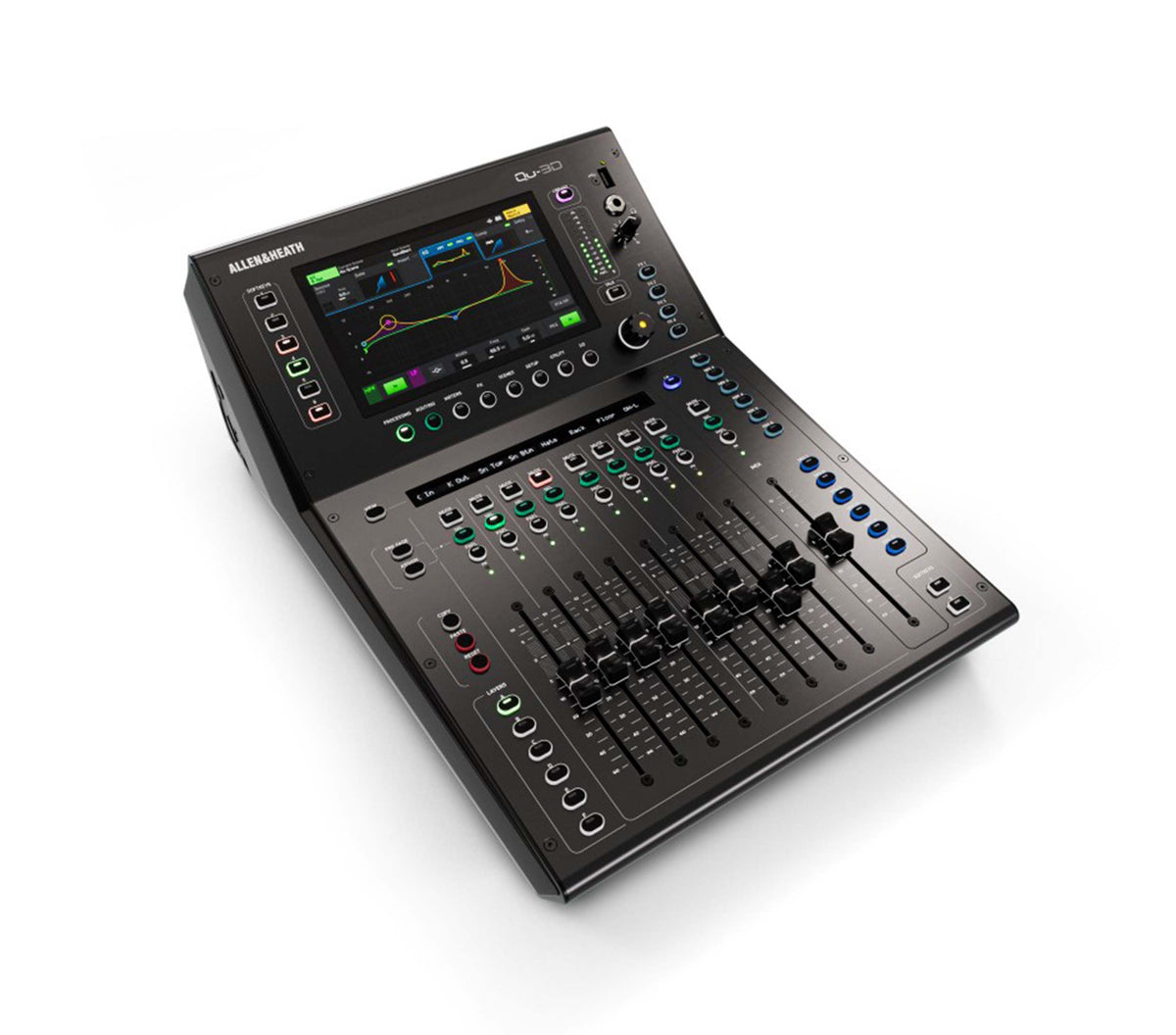
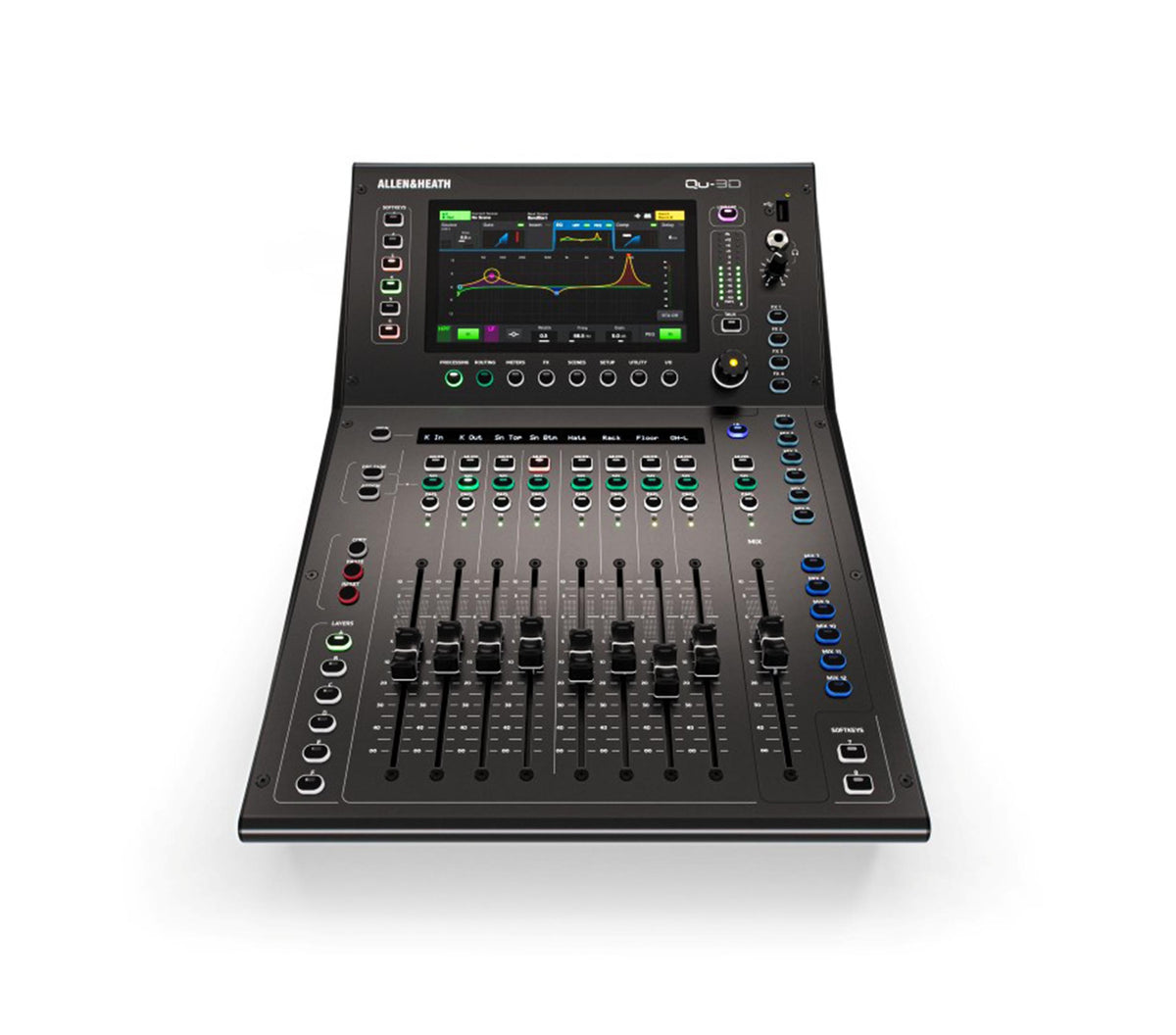
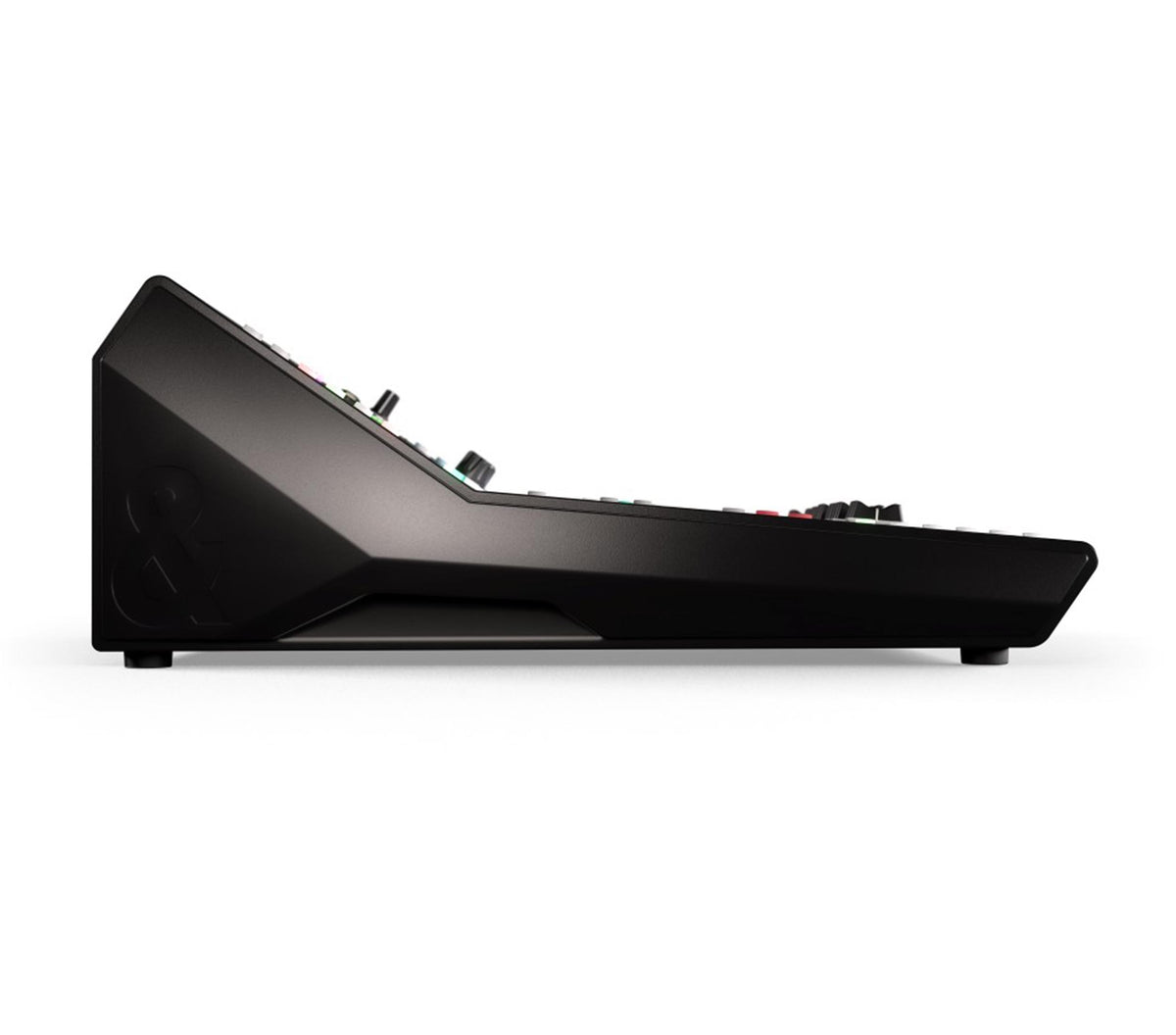
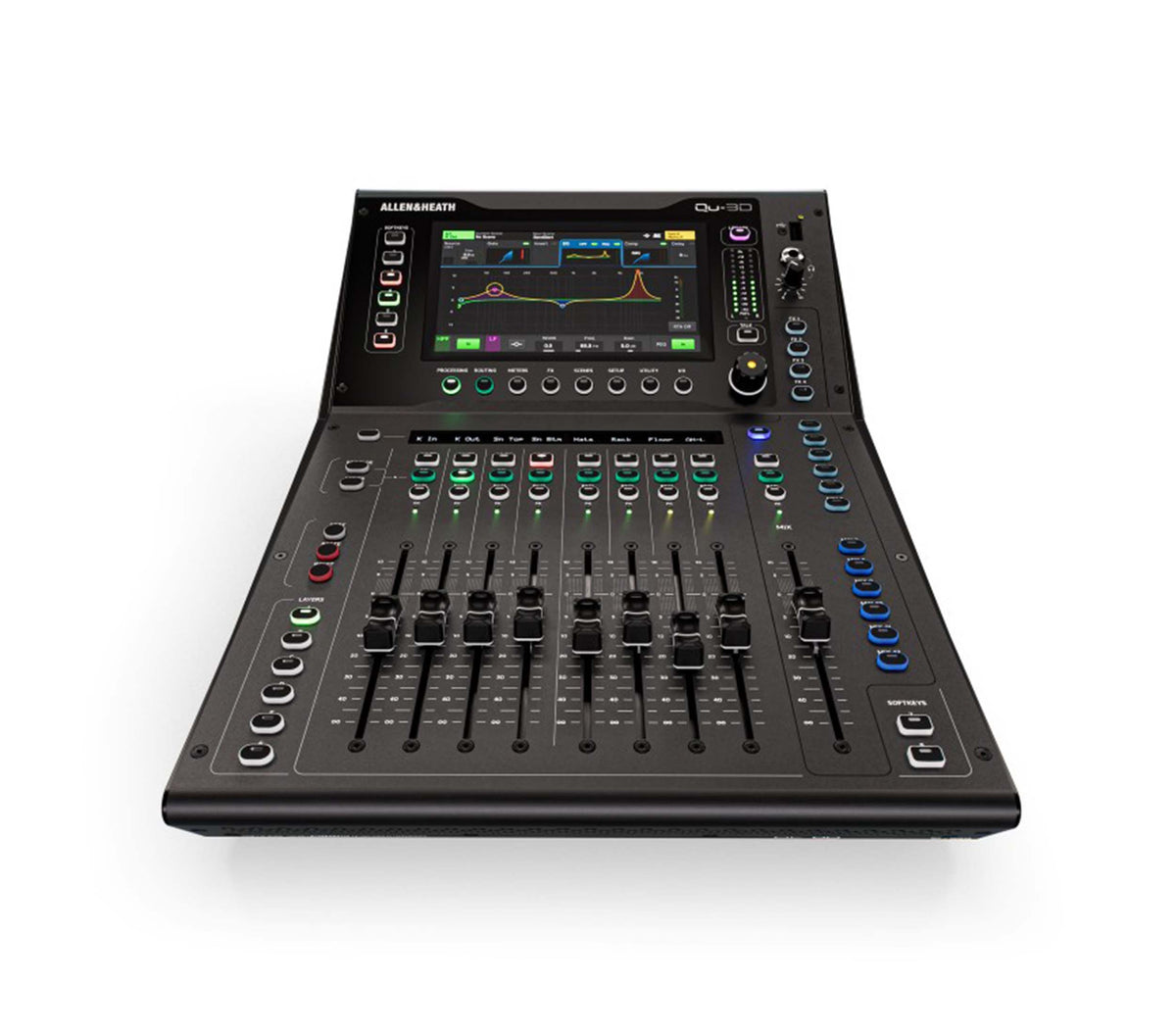
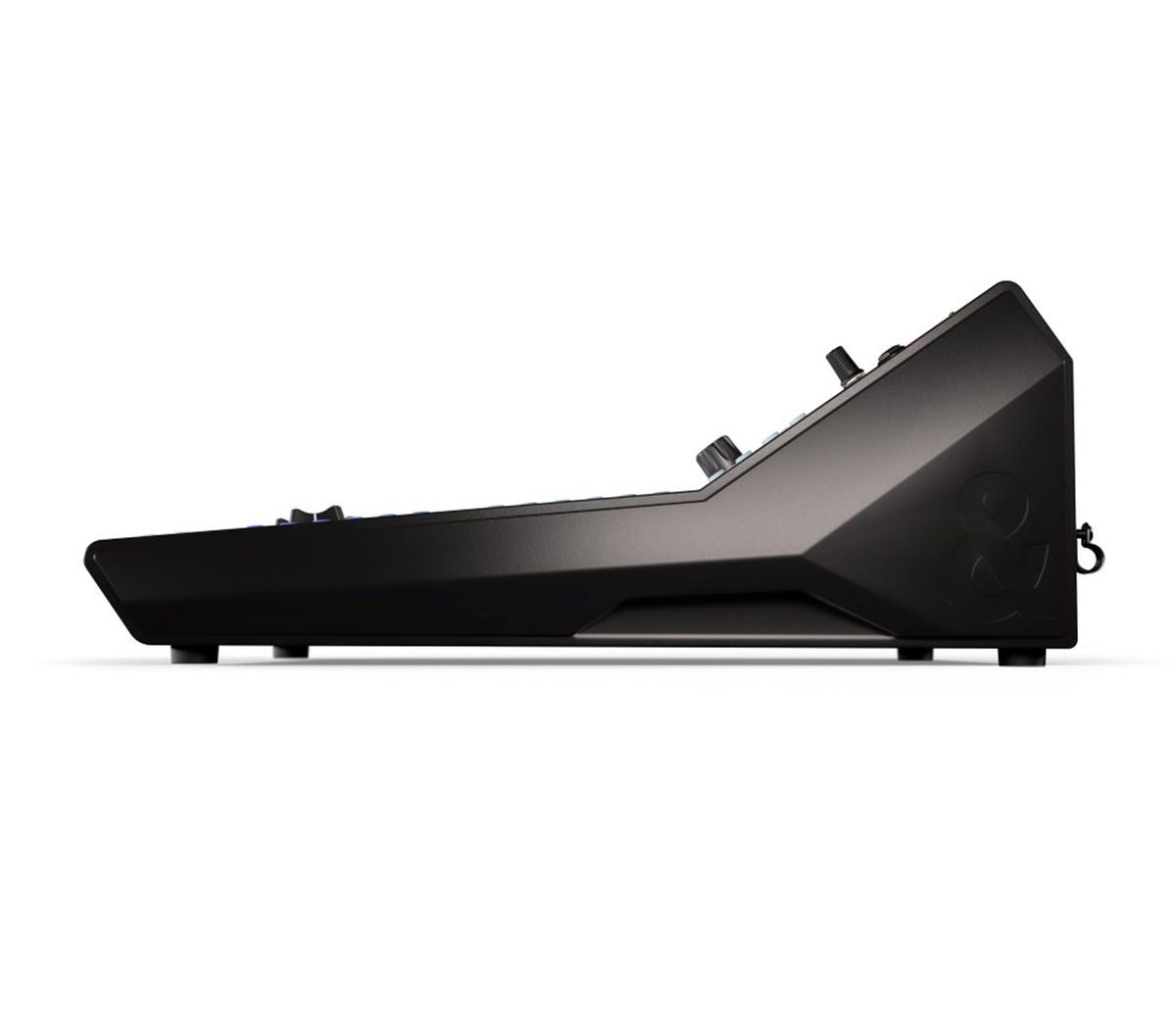
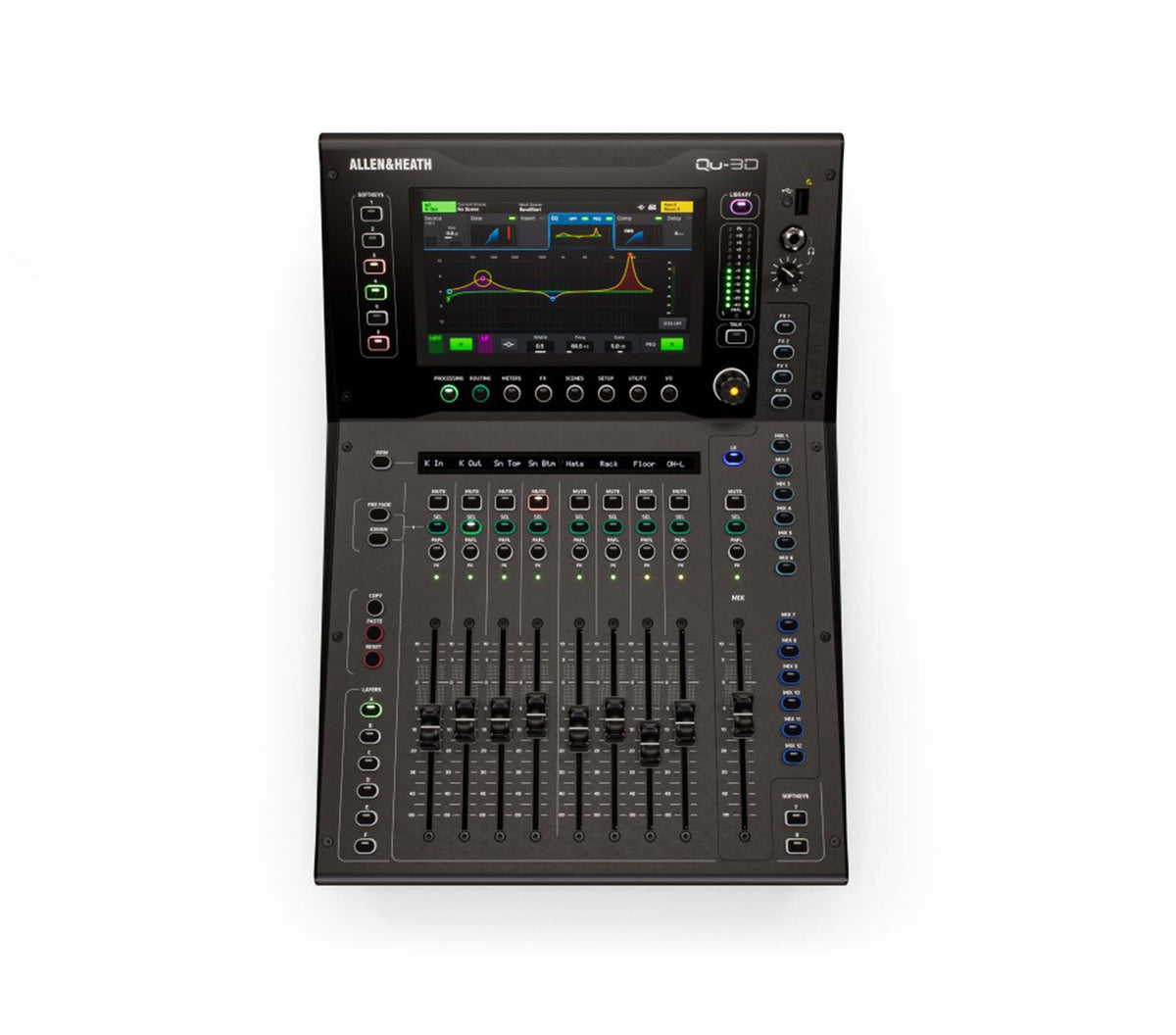
The Allen & Heath Qu-3D (also written Qu3D or Qu 3D) is the Dante version of the Qu-3, a compact desktop digital mixer with 32 mono input channels, a 96kHz XCVI core, and an 8+1 fader layout. It brings the processing power and features of the larger Qu-5, Qu-6, and Qu-7 mixers into a smaller desktop body, with 16 recallable mic/line preamps, a 7" capacitive touchscreen, and 9 motorized 100 mm faders. Allen & Heath designed its size and screen angle mainly for desktop use in AV, conference, broadcast, and studio installations.
Every input has a full channel strip: polarity, trim, high-pass filter, gate/expander, insert, 4-band parametric EQ, compressor/ducker, and delay. Mixes add a graphic EQ or Feedback Assistant, and six multi-FX engines come with dedicated stereo return channels. A 32-channel automatic mic mixer, a Gain Assistant, and 300 scene memories help you set up fast and recall your show, and the mixer records to USB or SD card and connects to a computer over USB-C. Latency from a local mic input to the main outputs is under 0.7 ms. Updated microphone preamps and high-performance 96kHz AD/DA converters feed the XCVI core to preserve the detail of the source, and every channel has a display showing its name, type, or socket number plus a chromatic level meter.
Key Features
- 96kHz XCVI core with variable bit depth up to 96-bit and under 0.7 ms latency
- 36 inputs to mix: 32 mono (linkable) plus 2 stereo
- 12 mixes (6 mono/linkable aux/group and 6 stereo aux/group), 4 FX sends, and 4 mono/linkable matrix mixes
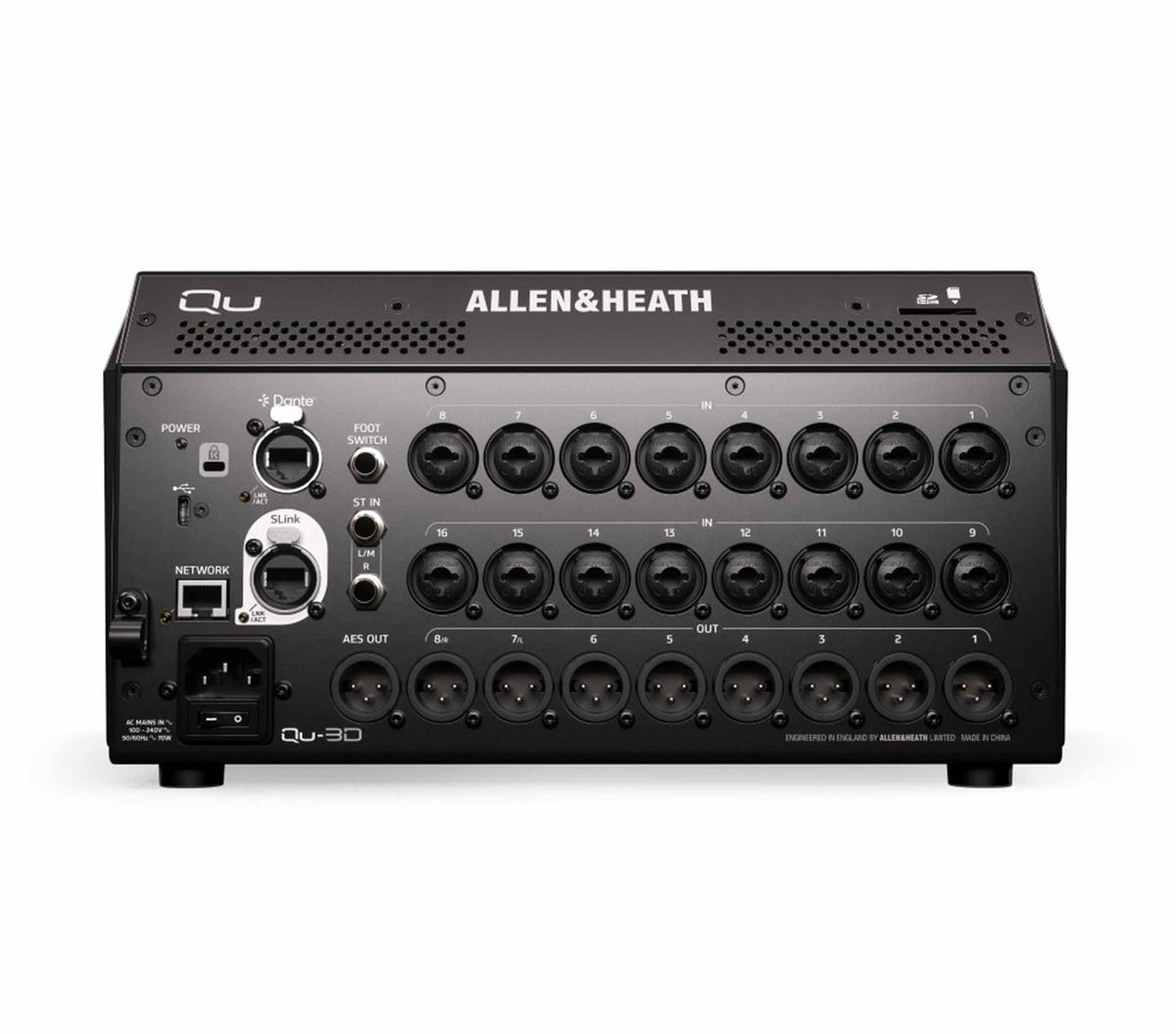
- 16 XLR/jack combi mic/line inputs with recallable preamps (0 to +60 dB), plus a stereo line input (2 × TRS)
- 8 XLR outputs, a stereo AES3 digital output, and a stereo headphone output
- 7" capacitive touchscreen, 9 motorized 100 mm faders, 6 customizable layers, and 8 SoftKeys
- USB-A stereo record/playback, USB-C 32 × 32 audio interface, and an SD card slot for multichannel recording
- Built-in 16 × 16 Dante interface at 48/96 kHz, with an optional software upgrade to 32 × 32 channels
- 128 × 128 SLink port for Everything I/O expanders, ME personal monitoring, and system connections
- Six FX engines, 32-channel automatic mic mixer, Feedback Assistant, Gain Assistant, and a real-time analyzer
- 300 scene memories per show, channel safes, user permissions, and DAW control emulation
- Free remote control apps for Windows, macOS, iOS, and Android, including Qu-MixPad for engineers and Qu4You for musicians' personal mixes
- DEEP Processing ready, with optional DEEP processing and RackExtra FX add-ons from the dLive system
- 19" rack-mountable with an optional rack kit
Who Is the Allen & Heath Qu-3D Ideal For?
- AV, conference, and broadcast installations that already use a Dante network and have limited space
- Broadcast and streaming setups that need a small desktop digital mixer
- Recording and project studios that want multichannel USB and SD recording
- Engineers, creators, and venues that need professional mixing in the smallest possible footprint
- Houses of worship, venues, and bands that want recallable scenes and per-channel processing in a compact desk
What's in the Box
- Allen & Heath Qu-3D digital mixer
Inputs and Outputs
- 16 × balanced XLR/jack combi mic/line inputs, with +48V phantom power per socket (XLR only)
- 1 × stereo line input (2 × balanced 1/4" TRS)
- 8 × XLR outputs, plus a stereo main LR output
- 1 × AES3 stereo digital output (XLR)
- 1 × 1/4" TRS headphone output with level control and dual 12-segment LED meter
- 1 × SLink port (EtherCON)
- 1 × Dante port (locking EtherCON), with a bridge to the network port for control messaging
- 1 × USB-A, 1 × USB-C, 1 × SD card slot, and 1 × RJ45 network port
- Footswitch connection (single or dual)
Allen & Heath Qu-3 vs Qu-3D and Qu-Pac
| Mixer | Format | Best for |
|---|---|---|
| Allen & Heath Qu-3 | Desktop, 8+1 motorized faders, 32 input channels, no Dante | Desktop use without a Dante network |
| Allen & Heath Qu-3D | Desktop, same surface as the Qu-3, with built-in 16 × 16 Dante (32 × 32 upgrade) | Desktop use on a Dante network |
| Allen & Heath Qu-Pac | 22 in / 12 out rack-mountable digital mixer | A rack-mountable format |
Choose the Qu-3D if you need to connect to a Dante network. Choose the Qu-3 if you do not need Dante and want the lower-cost option, or the Qu-Pac if you want a rack-mountable format.
Frequently Asked Questions
How many channels does the Allen & Heath Qu-3D have?
36 inputs to mix: 32 mono channels that can be linked, plus 2 stereo channels. It has 16 local mic/line inputs and a stereo line input, and the rest come from USB, SD, or expanders.
What is the difference between the Qu-3 and Qu-3D?
The Qu-3D adds a built-in 16 × 16 Dante interface at 48/96 kHz, upgradable to 32 × 32. Otherwise, the two mixers share the same surface and features.
Does the Qu-3D have Dante?
Yes. It has a built-in 16 × 16 Dante interface at 48/96 kHz, with a software upgrade available to 32 × 32 channels. A dedicated locking EtherCON connector carries Dante, and a bridge to the network port handles control messaging.
Does it have motorized faders?
Yes. It has nine 100 mm motorized faders, with six customizable layers, each with Select, Mute, and PAFL buttons.
Can I record with the Qu-3D?
Yes. It records stereo audio to a USB-A drive, multichannel audio to an SD card (16 channels at 96kHz or 32 channels at 48kHz, 24-bit), and streams 32 × 32 over USB-C to a computer.
Can I control the mixer from a tablet or laptop?
Yes. The free remote control apps run on Windows, macOS, iOS, and Android, and connect over the network port. Qu-MixPad is the live mixing app for engineers, and Qu4You lets musicians control their own monitor mix.
Can I add more inputs?
Yes. The SLink port gives access to 128 × 128 channels and works with Allen & Heath Everything I/O expanders, such as the AR84, and with ME personal monitoring systems.
What do the Gain Assistant and Feedback Assistant do?
The Gain Assistant sets the gain for one or more input channels and can keep monitoring levels during the show to avoid peaks. The Feedback Assistant finds and removes problem frequencies automatically, with up to 16 filters per output.
Does it support DEEP processing and add-ons?
Yes. The XCVI core is DEEP Processing ready, and optional DEEP Processing and RackExtra FX add-ons from the dLive system are available for the Qu platform.
Does it have phantom power?
Yes, +48V, switchable per socket on the XLR connection.
Can it be rack mounted?
Yes, it is 19" rack-mountable with an optional rack kit.
What are the dimensions and weight?
17.5 × 12.7 × 6.7 in (445 × 321 × 170 mm) and 15.45 lb (7.01 kg).
Full Technical Specifications
Audio and Processing
| Core | 96kHz XCVI FPGA, variable bit depth up to 96-bit |
|---|---|
| Inputs/buses | 36 inputs, 28 buses |
| Latency | Under 0.7 ms (local mic input to main LR) |
| Dynamic range | 110 dB |
| Frequency response | 20 Hz to 20 kHz, +0/-0.5 dB |
| THD+N (mic/line to main LR, unity gain) | 0.003% (-91 dB), 20 Hz to 20 kHz |
| Headroom | +18 dB |
| Mixes | 12 (6 mono/linkable aux/group, 6 stereo aux/group) |
| FX sends / matrix | 4 / 4 mono/linkable |
| DCA / mute groups | 8 / 8 |
| Scenes | 300 per show |
| Input processing | Polarity, trim, HPF, gate/expander, insert, 4-band parametric EQ, compressor/ducker, delay (up to 341 ms) |
| Mix processing | Insert, graphic EQ or Feedback Assistant, parametric EQ, compressor/ducker, delay (up to 682 ms) |
| Effects | 6 FX engines with dedicated stereo returns and 4-band PEQ |
| Automatic mic mixer | 32-channel, gain-sharing algorithm |
| Real-time analyzer | 2 × 31-band 1/3-octave (stereo) or 61-band 1/6-octave (mono) |
Inputs and Outputs
| Mic/line inputs | 16 × balanced combi XLR/jack, recallable preamps |
|---|---|
| Preamp gain | 0 to +60 dB in 1 dB steps |
| Maximum input level | +16 dBu (mic), +30 dBu (TRS with pad) |
| Phantom power | +48V, per socket |
| Stereo line input | 2 × balanced 1/4" TRS, nominal +4 dBu, +21 dBu maximum |
| XLR outputs | 8 × balanced, nominal +4 dBu, +22 dBu maximum |
| AES digital output | Balanced XLR, 2 channels, 44.1/48/88.2/96 kHz |
| Dante | 16 × 16 channels at 48/96 kHz, upgradable to 32 × 32; fully patchable; assignable as audio clock source |
| SLink | Neutrik EtherCON, up to 128 inputs and 128 outputs at 96kHz (GigaACE/GX) |
Recording, USB, and Control
| USB-A stereo record/playback | WAV, 2 channels, 48/96 kHz, 24-bit |
|---|---|
| SD card multitrack record/playback | 16 channels at 96 kHz or 32 channels at 48 kHz, 24-bit WAV (SDHC, 32 GB, UHS-I, Class 10) |
| USB-C streaming | 32 × 32 channels, 48/96 kHz, 24-bit (USB 2.0, ASIO/WDM on Windows) |
| Touchscreen | 7" capacitive, 800 × 480 |
| Faders | 9 × 100 mm motorized |
| SoftKeys | 8 |
| Network / MIDI | Fast Ethernet (100 Mbit/s) RJ45 for control and MIDI over TCP/IP; MIDI over USB-C |
Power and Physical
| Mains power | 100-240V AC, 50/60 Hz, built-in supply |
|---|---|
| Maximum power consumption | 70 W |
| Operating temperature | 32°F to 104°F (0°C to 40°C) |
| Dimensions (W × D × H) | 17.5 × 12.7 × 6.7 in (445 × 321 × 170 mm) |
| Weight | 15.45 lb (7.01 kg) |
| Packed dimensions (W × D × H) | 16.9 × 10.6 × 23 in (430 × 269 × 585 mm) |
| Packed weight | 19.47 lb (8.83 kg) |